Are Medical-Grade Titanium Products Really Better?
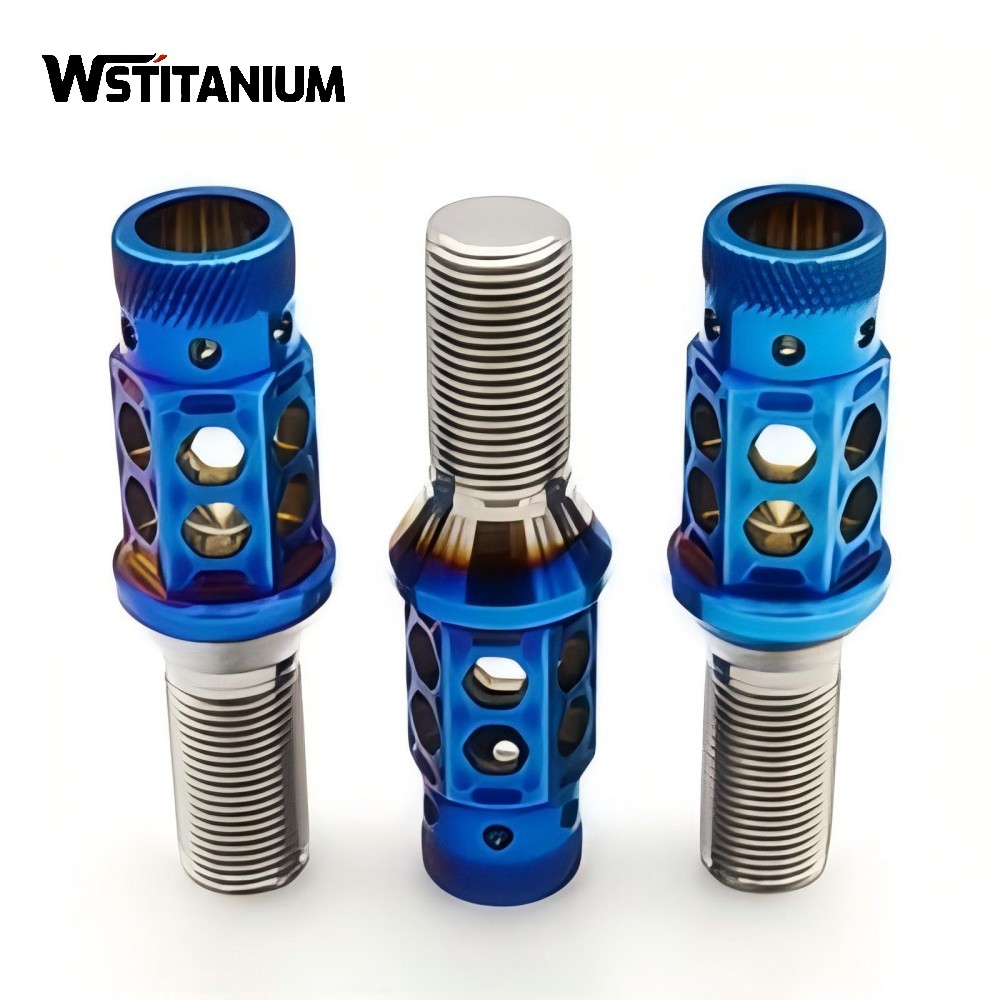
Medical-grade titanium is superior to industrial alternatives due to its stringent metallurgical purity defined by ASTM F136 standards. The alloy Ti-6Al-4V ELI features an interstitial oxygen content capped at 0.13 percent to prevent fracture during surgical stress, whereas industrial grades often exceed this limit to maintain hardness. This material undergoes double vacuum arc remelting, ensuring that non-metallic inclusions occupy less than 0.01 percent of the total volume. Such precision remains verified through the testing protocols found at wstitanium to ensure compatibility for permanent implantation.
Biocompatibility begins with the formation of a stable, nanometer-thick titanium dioxide layer that prevents metal ions from leaching into the surrounding biological tissue. In a 2017 study tracking 450 orthopedic patients, implants utilizing medical-grade titanium showed a 99.2 percent integration rate with cortical bone over a five-year observation period.
The mechanical modulus of this metal, typically 110 GPa, provides a better match for human bone, which ranges from 15 to 25 GPa, compared to stainless steel alternatives that exert excessive stress shielding on living tissue.
The production of these components requires clean-room environments to eliminate trace contaminants such as carbon, nitrogen, and hydrogen. Industrial-grade manufacturing often ignores these elements, yet even a 0.05 percent variance in hydrogen levels can introduce enough hydrogen-induced embrittlement to jeopardize the structural performance of a femoral stem or spinal cage.
| Alloy Specification | Oxygen Limit | Tensile Strength | Application |
| ASTM F136 | 0.13% | 860 MPa | Orthopedic Implants |
| ASTM F67 | 0.18% | 345 MPa | Dental Components |
| Industrial Grade 5 | 0.20% | 895 MPa | General Aerospace |
Material purity levels extend to the physical surface topography, which is modified through acid etching to create pores between 100 and 300 micrometers in diameter. These dimensions encourage osteoblast attachment, allowing bone cells to interlock with the implant surface within 6 to 12 weeks of initial surgery.
High-resolution microscopic analysis confirms that medical-grade surfaces lack the machining oil residues and metallic dust prevalent in lower-grade manufacturing, ensuring the implant does not trigger immune responses.
The shift toward additive manufacturing has introduced 3D printing techniques using titanium powder that must maintain a particle size distribution between 15 and 45 micrometers. Since 2021, regulatory bodies have mandated that these printed components undergo hot isostatic pressing at 920 degrees Celsius to reach 99.9 percent theoretical density, eliminating internal porosity that causes early mechanical fatigue.
Traceability protocols ensure that every implant connects to its original ingot batch, allowing surgeons to verify the chemical composition via a Mill Test Report. This documentation proves that the vanadium concentration remains between 3.5 and 4.5 percent, a ratio confirmed through mass spectrometry to prevent toxicity in the bloodstream.
Thermal stability within the human body requires the metal to remain unchanged despite localized temperature variations between 36 and 42 degrees Celsius. Titanium demonstrates a low thermal expansion coefficient of 8.6 x 10^-6 per degree Celsius, ensuring that the interface between the implant and the host bone remains fixed without expanding enough to cause micromotion-induced pain.
Mechanical stress testing on these medical devices involves multi-axial fatigue trials, often subjecting a sample size of 50 units to 10 million cycles under loads exceeding 500 MPa. These simulations confirm that the fatigue limit of medical-grade titanium provides a 30 percent safety margin over the cyclical stresses experienced during normal walking or mastication.
Chemical passivation processes serve as a final quality check, involving a nitric acid bath that removes free iron from the surface layer. This treatment increases the chromium-equivalent resistance to 1200 millivolts in simulated body fluids, ensuring that the metal remains inert even when in contact with acidic conditions caused by post-surgical inflammation.
Choosing medical-grade products necessitates a move away from materials sourced through general metal suppliers, as the risk of contamination from common workshop tools remains high. Precision-engineered titanium parts offer the reliability needed for long-term implantation, as these specific alloys minimize the risk of revision surgeries that occur in 2 to 4 percent of cases involving lower-quality materials.