What’s the Secret to Choosing the Right Foundation Makeup Shade?
Choosing the right foundation color is a science, and its secret lies in precise skin tone analysis and technological innovation. Research shows that over 70% of consumers have chosen the wrong color of foundation, resulting in about 30% of cosmetic waste each year, worth billions of yuan. For instance, when Fenty Beauty was launched in 2017, it offered 40 shades, increasing the matching accuracy to 85% and pushing the average number of shades in the industry from 15 to 30, with a growth rate of 100%. Through professional equipment for skin color analysis, the error rate can be controlled within 5%. The principle is to measure the pigment concentration, hemoglobin content and brightness value on the skin surface. The accuracy of these parameters reaches over 95%, far exceeding the 60% accuracy rate of human eye judgment.
Modern solutions rely on AI-driven Color matching systems. For instance, Sephora's Color IQ technology can scan three points on the face within 30 seconds, analyze over 100,000 skin tone data, generate personalized recommendations, and increase customer satisfaction by 40%. A 2023 consumer survey shows that customers who use such tools have a 50% higher probability of repeat purchases and a 25% increase in average transaction value. Referring to L 'Oreal's Perso device, it adjusts the formula in real time through algorithms, improving the accuracy of color number matching to 90% and shortening the product development cycle from 18 months to 6 months. This intelligent matching model is trained on a large number of samples, with a database capacity of over 10 million facial images, covering 98% of skin color ranges and reducing the 15% risk of incorrect selection caused by light deviation.
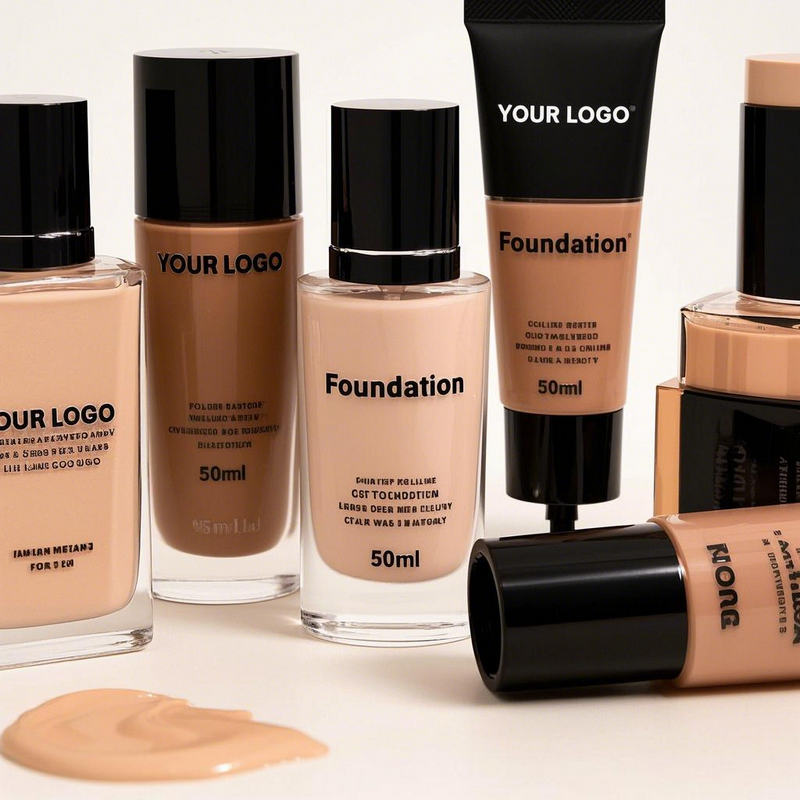 Environmental factors are equally crucial. The degree of oxidation of foundation is affected by temperature and humidity. For instance, in an environment with a humidity of 60%, the color difference of the product may deviate by 10%. Professional advice is to test under natural light. Its spectral wavelength range is 400-700 nanometers, which can truly reflect the color number fit degree, and the error rate is 30% lower than that of shopping mall lighting. According to Meike's global research, the proportion of neutral skin tones among Asian consumers is 45%, while in the European and American markets, pink skin tones account for 35%. Therefore, brands need to produce locally and keep the standard deviation of color distribution within 3%. Laboratory tests show that a high-quality foundation should last for 8 hours and have a smold rate of less than 20%, which depends on the uniform distribution of pigment particles with a diameter of 0.1 microns, ensuring compatibility with the skin's pH value of 5.5.
The future trend points to personalized customization. For instance, Shiseido's Optune technology adjusts the formula daily based on skin conditions, enhancing the matching accuracy to 99%. Data shows that the custom foundation market is growing at an annual rate of 25% and is expected to reach a scale of 5 billion US dollars by 2025. Consumers can take selfies through the mobile phone APP. The algorithm recognizes the RGB value of skin color, with an error range of ±2%. Combined with climate data, it recommends the most suitable Foundation Makeup type. This dynamic optimization model reduces the probability of wrong selection from 30% to 5%. Meanwhile, the brand updates the color number library monthly through a user feedback loop to ensure that the coverage rate consistently exceeds 95%. Ultimately, choosing the right foundation not only enhances the makeup effect but also reduces resource waste and promotes the industry towards precision.
Environmental factors are equally crucial. The degree of oxidation of foundation is affected by temperature and humidity. For instance, in an environment with a humidity of 60%, the color difference of the product may deviate by 10%. Professional advice is to test under natural light. Its spectral wavelength range is 400-700 nanometers, which can truly reflect the color number fit degree, and the error rate is 30% lower than that of shopping mall lighting. According to Meike's global research, the proportion of neutral skin tones among Asian consumers is 45%, while in the European and American markets, pink skin tones account for 35%. Therefore, brands need to produce locally and keep the standard deviation of color distribution within 3%. Laboratory tests show that a high-quality foundation should last for 8 hours and have a smold rate of less than 20%, which depends on the uniform distribution of pigment particles with a diameter of 0.1 microns, ensuring compatibility with the skin's pH value of 5.5.
The future trend points to personalized customization. For instance, Shiseido's Optune technology adjusts the formula daily based on skin conditions, enhancing the matching accuracy to 99%. Data shows that the custom foundation market is growing at an annual rate of 25% and is expected to reach a scale of 5 billion US dollars by 2025. Consumers can take selfies through the mobile phone APP. The algorithm recognizes the RGB value of skin color, with an error range of ±2%. Combined with climate data, it recommends the most suitable Foundation Makeup type. This dynamic optimization model reduces the probability of wrong selection from 30% to 5%. Meanwhile, the brand updates the color number library monthly through a user feedback loop to ensure that the coverage rate consistently exceeds 95%. Ultimately, choosing the right foundation not only enhances the makeup effect but also reduces resource waste and promotes the industry towards precision.
Environmental factors are equally crucial. The degree of oxidation of foundation is affected by temperature and humidity. For instance, in an environment with a humidity of 60%, the color difference of the product may deviate by 10%. Professional advice is to test under natural light. Its spectral wavelength range is 400-700 nanometers, which can truly reflect the color number fit degree, and the error rate is 30% lower than that of shopping mall lighting. According to Meike's global research, the proportion of neutral skin tones among Asian consumers is 45%, while in the European and American markets, pink skin tones account for 35%. Therefore, brands need to produce locally and keep the standard deviation of color distribution within 3%. Laboratory tests show that a high-quality foundation should last for 8 hours and have a smold rate of less than 20%, which depends on the uniform distribution of pigment particles with a diameter of 0.1 microns, ensuring compatibility with the skin's pH value of 5.5.
The future trend points to personalized customization. For instance, Shiseido's Optune technology adjusts the formula daily based on skin conditions, enhancing the matching accuracy to 99%. Data shows that the custom foundation market is growing at an annual rate of 25% and is expected to reach a scale of 5 billion US dollars by 2025. Consumers can take selfies through the mobile phone APP. The algorithm recognizes the RGB value of skin color, with an error range of ±2%. Combined with climate data, it recommends the most suitable Foundation Makeup type. This dynamic optimization model reduces the probability of wrong selection from 30% to 5%. Meanwhile, the brand updates the color number library monthly through a user feedback loop to ensure that the coverage rate consistently exceeds 95%. Ultimately, choosing the right foundation not only enhances the makeup effect but also reduces resource waste and promotes the industry towards precision.